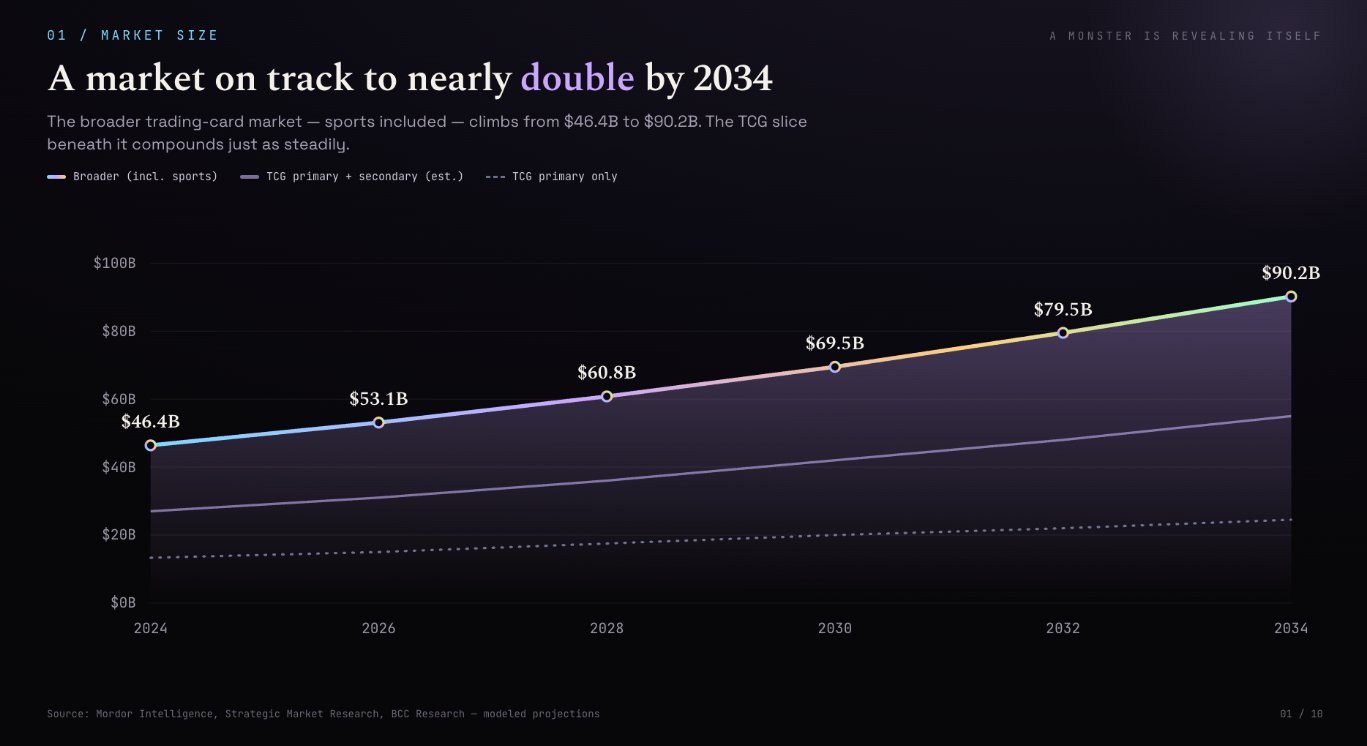
Trading cards are a $50B rocket ship of a market that crypto has barely touched. The most bullish part is not just the market size. It is that card collectors have been acting like crypto users for years, and that behavior is accelerating.
They grade raw cards into standardized assets. They price them off comps. They trust slabs. They care about provenance, scarcity, liquidity, speculation, and vibes. They just do not call it tokenization.
A Monster is Revealing Itself.
The market was already moving this way
The strongest case for onchain TCGs is not that crypto somehow fixes trading cards. The cards are already winning. Pokemon had a monster year. Magic is still enormous. The broader market keeps compounding despite fragmented infrastructure and messy secondary-market rails.
That is the interesting part: this category does not need crypto in order to matter. It already matters. The opportunity is that the market is evolving faster than the rails underneath it.
The slab was analog tokenization
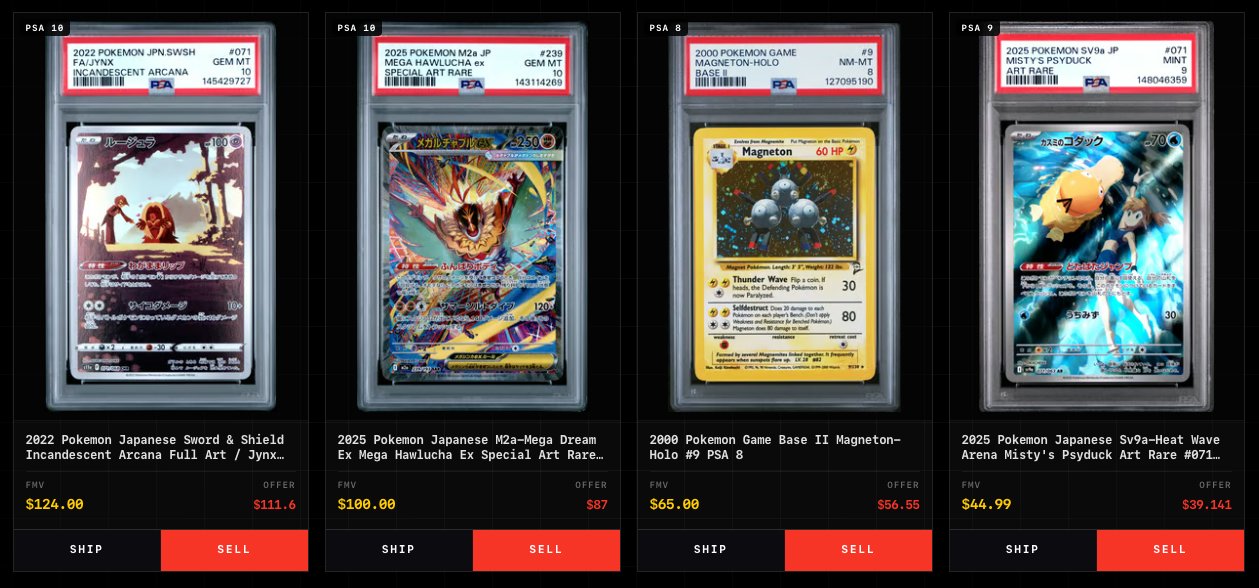
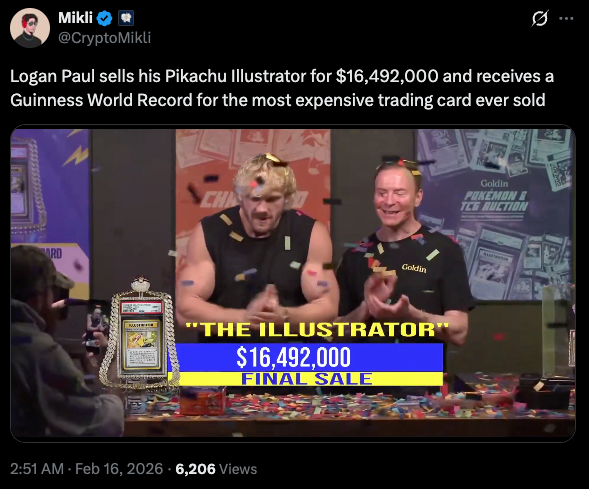
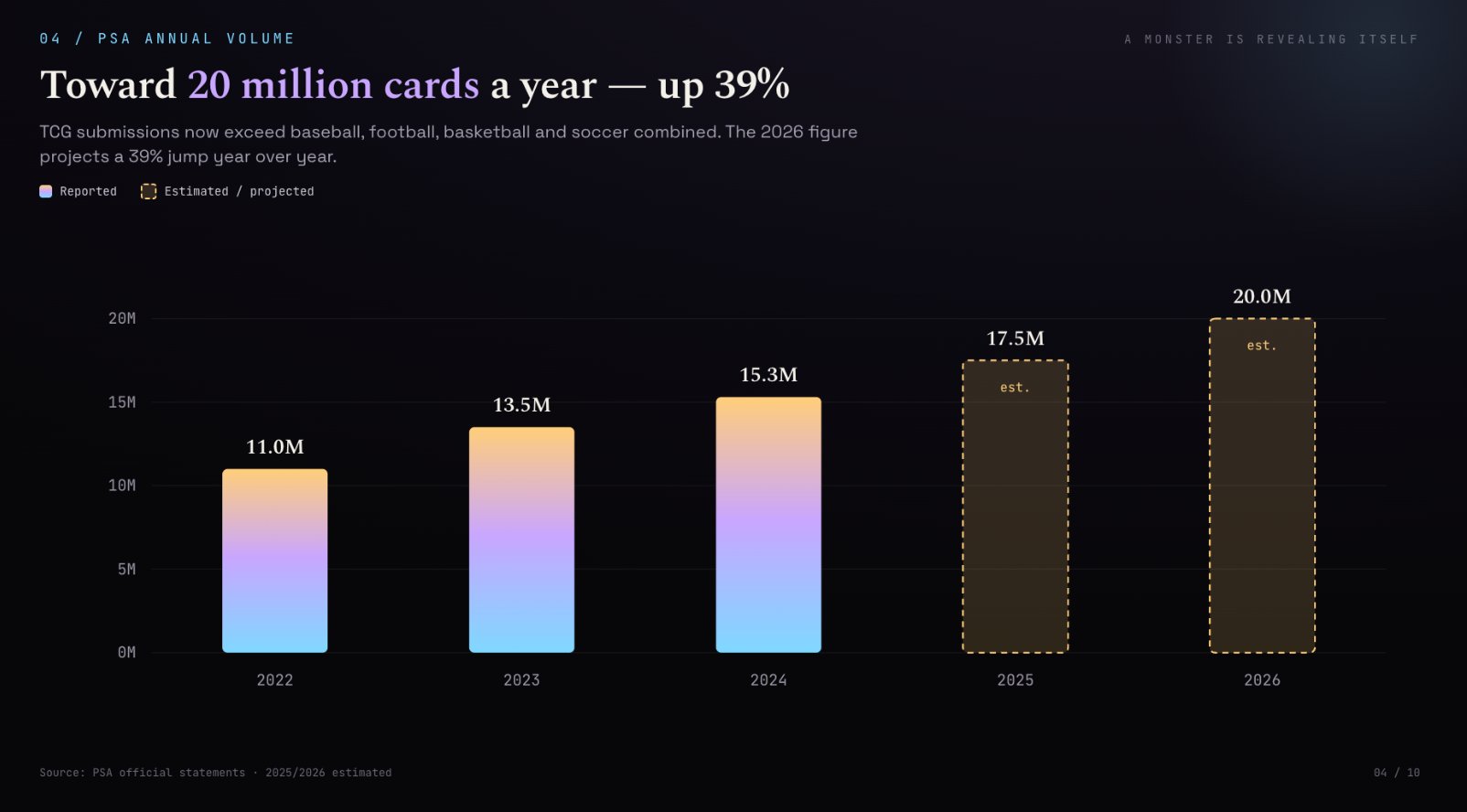
When collectors send cards to PSA, they are not just getting them graded. They are converting a raw physical object into something certified, standardized, and more liquid. A raw card is messy. A slab is legible.
The grade compresses condition into a number. The cert number gives the object an identity. The case makes it easier to store, insure, price, ship, trust, and sell. Through that process, the card starts behaving less like cardboard and more like a financial object.
That is analog tokenization.
The rails are showing their age
The traditional TCG market is genuinely great. Card shows are fun. Hunting specific pieces is fun. The social layer is real. But the more valuable cards become, the less sense it makes to physically move them and the more sense it makes to move ownership instead.
At the high end, shipping introduces customs friction, insurance complexity, fraud risk, regional lock-in, and messy price discovery. At a certain level of financialization, the physical card wants to stop moving. The ownership wants to move with minimal slippage.
That is where onchain starts to matter.
The reveal was right. The asset was wrong.
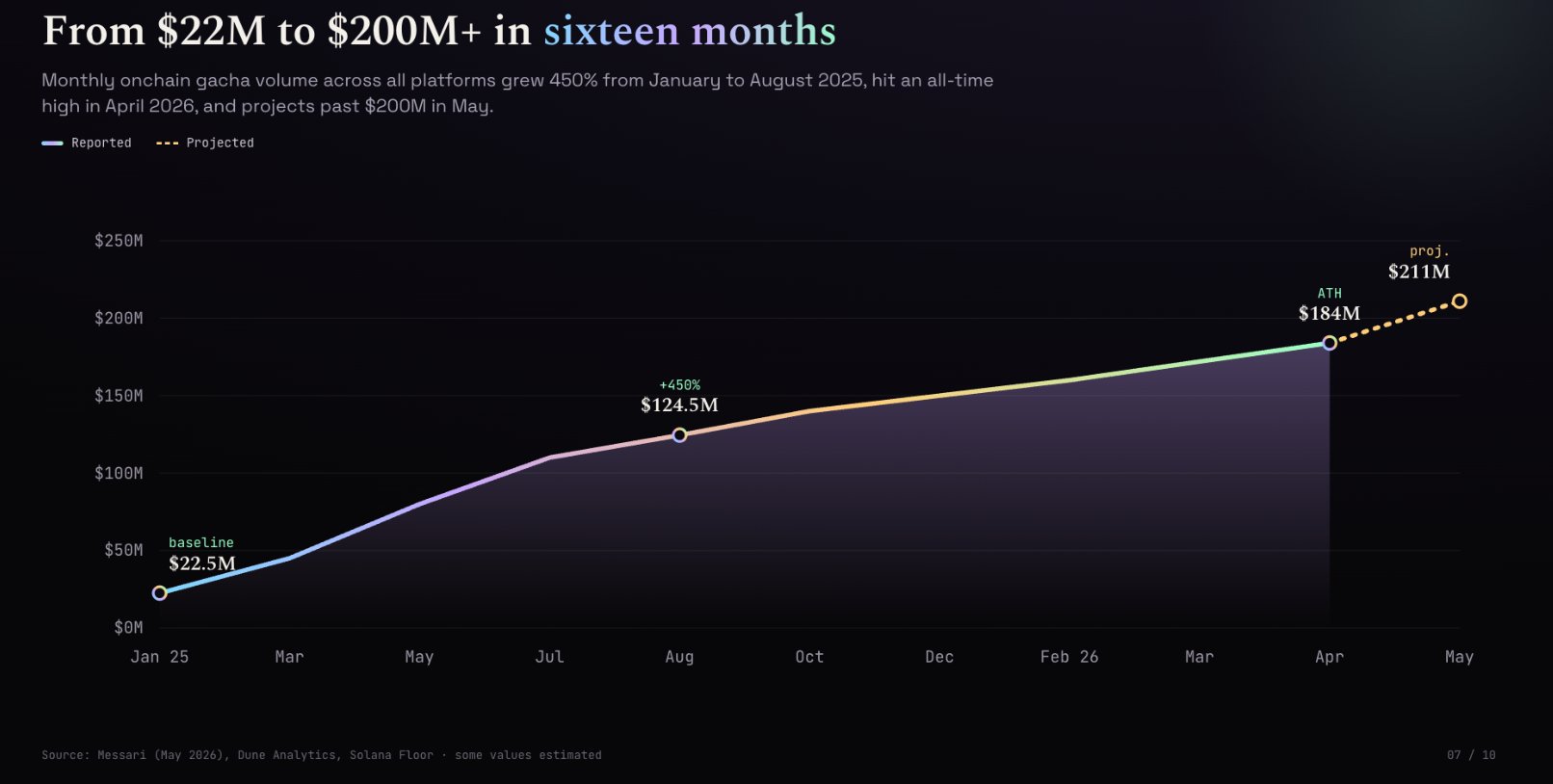
The closest historical comp is NFT minting. The most broadly enjoyed part of minting was always the reveal: the suspense, the refresh, the group chat, the screenshot, the dopamine hit if you pulled something rare. Gachas are built around that mechanic.
But collectible NFTs asked users to believe too many new things at once: new IP, new language, new tech, new ownership behavior, and new markets. TCGs invert that problem. The asset already has meaning. The IP already matters. The market already exists. The users already understand rarity.
Nobody needs to be convinced Pokemon is worth caring about. Most people came to trading cards through unfinancialized enjoyment first and optional financialization second. That is a much cleaner bridge.


The wedge is behavioral, not ideological
Crypto works best when it discovers an existing behavior and gives it better rails. Card collectors already want legibility, standardized assets, provenance, clean pricing, and liquid ownership. That preference has been visible for years.
Onchain TCG products do not need to invent the desire. They just need to meet it with clearer odds, better settlement, transparent pricing, and market structures sophisticated users actually prefer.